Dreams on Credit
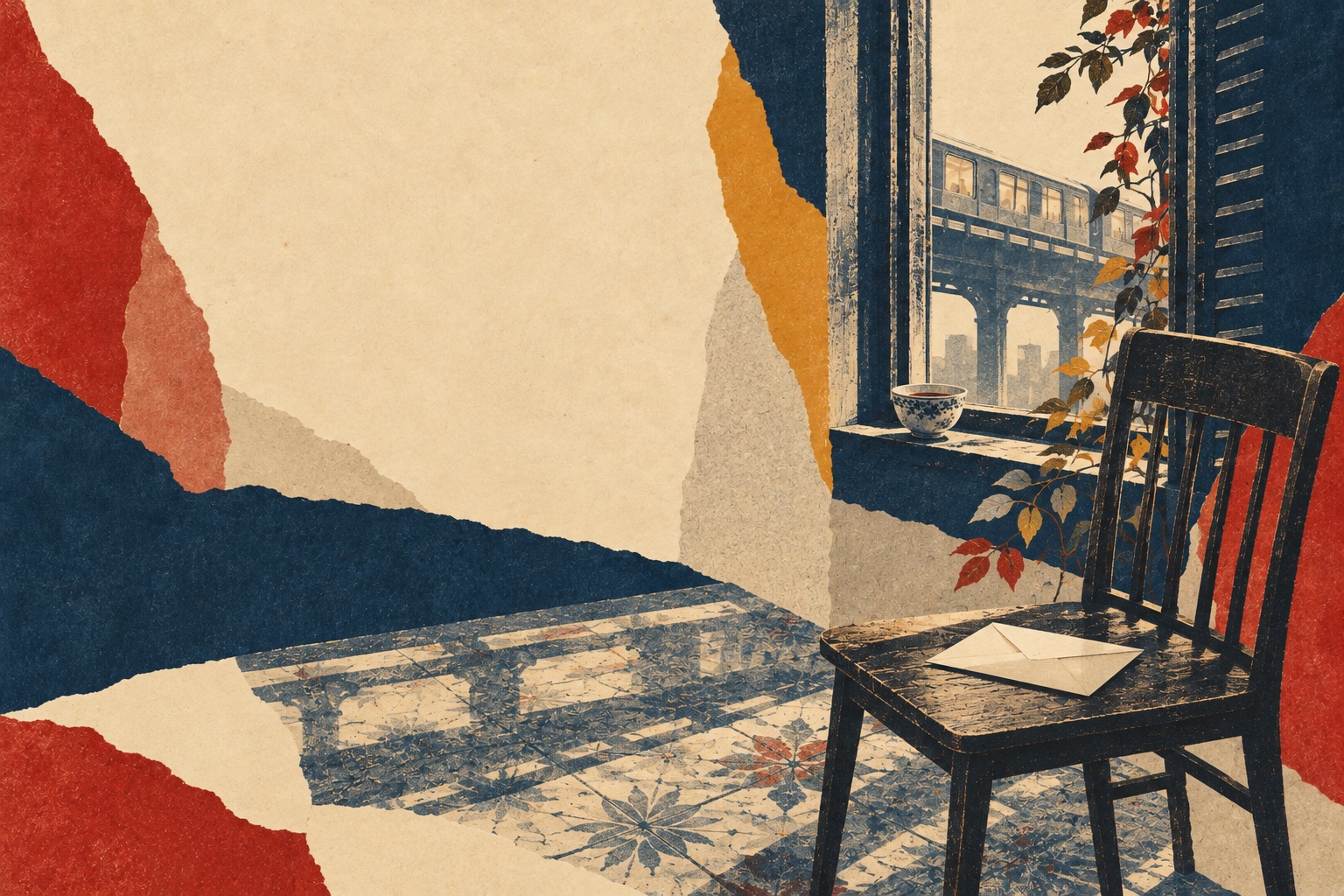
Dreams on Credit
“Some dreams ask for more than ambition; they ask what we are willing to carry.”
‘The American Dream…’
New York City is dazzling with its skyscrapers piercing the sky over Manhattan; neighborhoods packed so tightly, they seem to suffocate; streets swollen with people at every hour, like a jungle made of concrete, a busy street made of people’s dreams. The city is always in motion, as if pausing for even a second would mean being swallowed whole. Everything is so expensive that I often find myself standing at a distance, only looking. A hot dog from a park food cart, considered the most “affordable” meal, costs four dollars. With that same amount of money in Vietnam, I could buy five bánh mì and walk away comfortably full, without a second thought.
In America, fullness is a luxury in a very different sense. The ‘American Dream’ is not paid for with effort alone, but with money. Money to live, money to eat, money to learn, money simply to exist. Here, everything comes with a bill. Even time is priced. You do not just pay rent, you pay for every minute on the subway, every extra hour at work, every sleepless night traded for a morning that barely meets a deadline. No one mentions this when they talk about America; they only speak of opportunity, but rarely of cost.
Some nights, I sit alone in my small room, listening to polite, practiced social noises drifting through the walls, laughter at the right moments, greetings so smooth they feel hollow. The artificiality is flawless, almost farcical. I am not deprived here; I have shelter, food, a path forward. And yet I have never truly felt full, full of presence, full of human warmth. Everything has shape, but nothing seems to carry weight. I am not failing, but I am afraid to stop. In America, stopping feels dangerous, like falling behind, like being erased by a system that never waits. So, I do not allow myself to pause. I do not allow myself to remove the stiff, polite smile I wear everyday. It becomes my uniform, my persona, masking myself from the busy street of hope and chaos. No matter how I cried the night before, no matter how silent the room was as my heart pounded in my chest, the next morning I still place that industrial smile on my face, out of habit. It only needs to be worn. No one ever cares whether it fits.
It is absurd, really. How powerful must money be to make people this emotionally distant from one another? Here, everyone is consumed by their own life, so busy surviving that there is no space left for slowness, for listening, for concern that does not generate profit. Each person moves in a sealed orbit, colliding briefly before drifting apart without any imprints. And I, among all these trajectories, learn to exist quietly, not too fragile to be discarded, not strong enough to rest. Loneliness in America is expensive, too. You can live among millions, brushing shoulders on Manhattan sidewalks, and still have no one to call when you need help.
Relationships here are fast, convenient, polite and thin, just like a pack of instant noodles; enough to get you through the day, but never enough to make you feel held beyond that meal. They warm you briefly, then fade, leaving behind the quiet knowledge that something essential is still missing. People ask: “How are you?” out of habit, not out of genuine curiosity; the question is asked, but the answer is never needed. Everyone is busy, everyone is managing something, everyone is trying to stay upright in a system that offers no pause to its momentum. Loneliness becomes so normalized that admitting it feels like a personal failure.
America is often admired for its luxury. But every luxury has a shadow: the fear of falling. When everything stands so high, the descent is steeper. You learn to work beyond what your body can tolerate, because rest feels indulgent, almost irresponsible. Youth here dissolves into long winters, cold rooms, and hurried meals eaten without ceremony. And I find myself wondering: is it worth trading youth for years spent lying beside a pile of money in emotional winter? Is success measured by accumulation, or by having enough time to live? Is a stable but hollow life truly better than an uncertain one filled with warmth?
‘The American Dream’, in reality, is not pink or golden. It is more gray. The gray of concrete, receipts, and cold mornings spent stepping outside without knowing what exactly you are running toward. The city keeps moving. And so do I, still writing my way through the gray American Dream, marked by both what I lose and what I manage to keep.
I am still standing in the middle of New York,
Between movement and pause,
Unsure…
If I am only passing through
Or slowly becoming part of the gray.
-EL-