Do You Remember?
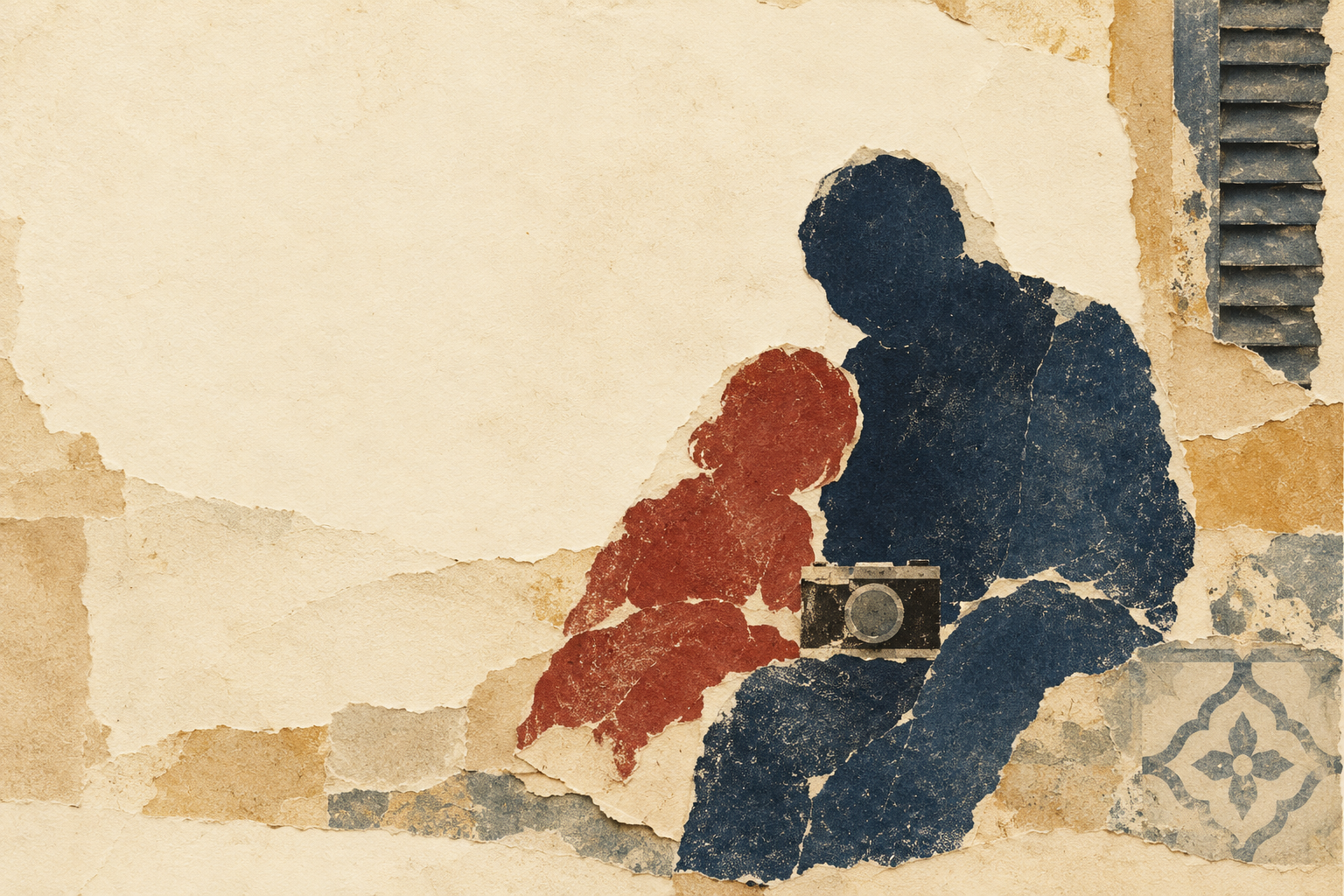
Do You Remember?
“And if that second never comes, I’ll remember enough for both of us.”
Photography has a strangely possessive nature. We take, capture, keep, small claims of ownership over things already in the act of leaving. My grandfather taught me that keeping something required a pause. As a child, I was always too quick with the shutter, pressing straight through the faint resistance beneath my finger and turning faces I knew by heart into smears of light. Grandpa would take my hand and bring my finger back. “Halfway first,” he would say. “Wait.” So I did, holding still through those few uncertain seconds while the lens searched, until the blur slowly gathered itself back into a familiar face.
After years, I stopped making that mistake. My photographs grew sharper; Grandpa no longer needed to reach over and correct my hand. I thought I had learned what he was teaching me.
Yet I had only learned where to pause on a camera.
I
“Grandpa!”
I am already running when he turns. I crash into the soft roundness of his belly and throw both arms around his waist, stretching my fingers toward each other behind his back until my shoulders ache. I am convinced another inch will do it, then another, but there is always a little more of him than my arms can hold.
“Grandpa, you’re too big.”
He laughs, and with my cheek pressed against his stomach, I feel the laughter move through him before I hear it. His hands slide beneath my arms, and suddenly my feet leave the floor. The room rearranges itself from up there: tabletops appear, the tops of heads come into view; everything that seemed large a moment ago becomes smaller beneath my dangling feet. I laugh and hold tighter, delighted by the simple fact that Grandpa is big enough to change the size of my world.
II
I raise my arms, and Grandpa bends down as he always does. His hands slide beneath me, but this time I feel them shift before my feet leave the floor. He adjusts his grip, pulls me closer, and for a moment I am suspended against his chest exactly where I have been hundreds of times before. Something across the room catches my eye.
“Grandpa, put me down.”
He lowers me until my feet touch the floor, and I am gone before he has fully straightened, already running toward whatever seemed important enough to leave his arms for. I cannot remember what it was. Whatever I wanted had disappeared so completely that I cannot even give it a shape. I remember only what I left behind: his hands loosening around me, my feet finding the floor, and the few steps I took without turning back.
I do not know yet that Grandpa will never pick me up again.
So I keep running.
III
Grandpa is driving, and I have my head against the window, watching Da Nang slide across the glass. I am not carsick, which seems to me convincing enough evidence for something I have already decided.
“You’re the best driver, Grandpa.” He laughs without taking his eyes off the road.
There has been a hospital in Hanoi and a heart surgery, but I know them mostly as things the adults have been worried about. They feel very far away from the man in front of me. His hands move easily with the steering wheel, turning us onto another familiar street, and from where I sit, there is nothing about him I know how to call sick.
I lean back against the window.
As far as I am concerned, Grandpa is better.
IV
The photograph comes out blurred. Grandpa takes one look at the screen and reaches for my hand before I can try again.
“Too fast.”
“I know.”
I raise the camera, and this time his finger rests lightly over mine, stopping it at the faint resistance beneath the shutter.
“Halfway.”
The lens searches for a moment. Then the face in front of me sharpens.
“Now.”
I press.
Grandpa studies the photograph before handing the camera back to me.
“See?”
I do.
V
The next time I get into the car, someone else is driving. I barely notice. Then it happens again, and again, until the unfamiliar arrangement becomes familiar enough that I stop thinking about it. Somewhere in between those rides, Grandpa stops being the person behind the wheel, though I cannot point to the day it happens.
By the time I think to remember his last drive, I cannot.
I only remember that once, from the back seat, I was certain he was the best.
VI
When did Grandpa’s camera live in the glass cabinet? I pass it so many times without wondering why it is still there. The strap lies folded beneath the body; the lens turned toward the glass, and each time I look, nothing has changed. Eventually, that is simply where the camera belongs.
It takes me so long just to realize what has disappeared from the room with it.
I try to remember the last time Grandpa held it and find that I cannot. I have to work backward from the camera behind the glass to recover an older image of it resting naturally in his hands, back when I never thought I would need to remember how that looked. I had seen the camera behind the glass so many times that I had nearly forgotten what it looked like in his hands.
VII
Grandpa stops halfway through a sentence, his hand lifting as though the missing word might still be somewhere within reach. When someone finds it for him, his face loosens. At first, forgetting is kind enough to give things back. The word returns. The reason he entered a room returns. Then he asks the same question minutes after hearing the answer or begins a story only to lose where it was going. Little by little, more of his life seems to arrive as something he has already lived but cannot quite recognize. But every time something returns to him, even for a moment, it is enough to make me believe the rest is still somewhere inside him, waiting to be found.
VIII
“Grandpa, take a picture of me.”
I hand him my phone and step back. He raises it toward me, and I begin posing.
His thumb touches the screen. Nothing.
He tries again, pressing carefully around the white circle without ever finding it. I could cross the room and show him in seconds, but I do not move. Those hands knew cameras before mine did; they were the hands that taught my fingers where to stop and when to press. I am certain that, with just a couple more seconds, they will remember.
Fifteen minutes pass.
“Where do I press?”
For a second, I cannot answer.
I cross the room, take his hand, and place his thumb over the shutter.
IX
“Grandpa!”
I am already running when he turns, calling for him before I have even taken off my shoes. But this time, his face does not meet mine with recognition. His eyes settle on me with the careful politeness reserved for someone almost familiar.
I stop.
I am his granddaughter, the little girl he once lifted from the floor and the one who always ran to him after being scolded, knowing his voice would rise in my defense. Surely, I have lived in too many places inside his memory to disappear from all of them at once.
So I give him another second.
Then another.
His eyes remain on my face, searching. I am no longer sure what I am waiting for. Some small magic? Something that will suddenly soften his expression and bring back the familiar “You’re home?” as though these strange seconds had never happened.
But nothing magical happens.
***
For the first time, I stand perfectly still in front of Grandpa and do not come back into focus.
I remember those seconds with a clarity that feels almost cruel: your eyes searching my face, the silence where “You’re home?” should have been, and myself still standing there as though waiting long enough might return me to you.
I used to find comfort in the possessiveness of photography, in the fragile promise that what passes can somehow be made ours forever.
But does it?
Perhaps that is the privilege of having something: I rarely think about keeping it until keeping is all I can do.
Perhaps that was what I misunderstood about the lesson you gave me years ago. Grandpa, you taught me to wait for a photograph to come into focus, and I became very good at it. But you never taught me how to know when life itself was asking me to wait. There is no slight resistance beneath my finger, no quiet signal that says stay here; look a little longer. By the time I understand which moments deserved that extra second, they have already become memories.
You would be proud of this granddaughter, Grandpa. I think I might be almost as good as you now. My photographs come out sharp; I know exactly where to pause and exactly when to press. But somehow, with the one I wanted most to keep, I still made the mistake you spent years teaching me not to make. I rushed through that tiny halfway space, certain there would always be another second to stop, another chance to focus.
There wasn’t.
I wish I had looked longer while you could still look back and remember the same things I did.
But it’s okay, Grandpa.
If you forget the little girl you once lifted from the floor, I’ll tell you about her. I’ll tell you until she becomes familiar again, and if tomorrow she is gone, I’ll tell you again.
I’ll keep reminding you until, even for a second, you remember me.
And if that second never comes, I’ll remember enough for both of us.
-EL-