Before the Editing
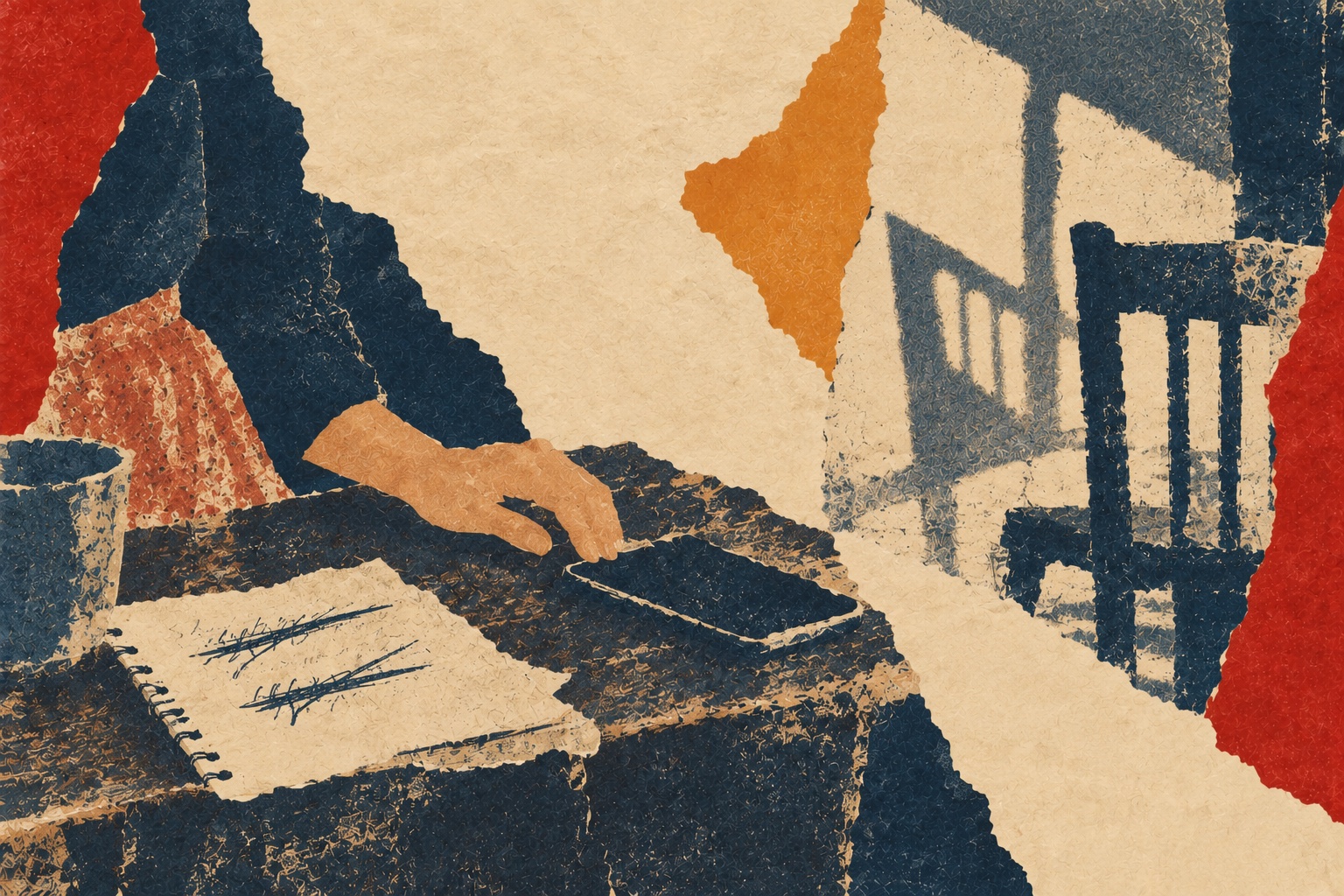
Before the Editing
“We rarely give people our sadness while it is still happening.”
We rarely give people our sadness while it is still happening. We give it to them later, after language has had time to clean it up.
By then, the crying has become a difficult night. Fear has become a rough period. The thing that once kept us awake until morning can be compressed into two sentences over lunch, sometimes even followed by laughter. Memory is an excellent editor. It removes the trembling from our voices, corrects the grammar of confusion, and gives endings to things that, while we were living them, seemed to have none.
Perhaps that is why we tell ourselves we are honest. We do eventually tell the truth. We just wait until it no longer needs anyone. I did not know I was doing this until someone I loved began doing it to me. She knew me before I had learned to edit.
There was a period of my life when I seemed to be frightened by everything and nothing at once. I could have named individual problems if someone had asked, but none of them explained the whole thing. Fear had become atmospheric. It followed me into ordinary afternoons, sat beside me while I studied, and occasionally appeared at night when nothing was happening at all.
She knew me then. More importantly, she knew me during.
I did not have to return weeks later with an organized account of what had happened. I could come to her while the story was still making no sense. I could contradict yesterday’s certainty with today’s panic. I could say, I don’t know, and leave the sentence there.
For someone who had always preferred being the listener, this felt almost indecent.
I was accustomed to receiving other people’s difficult stories. There was comfort in being useful to sadness without having to expose my own. I could listen carefully, offer whatever words I had, and go home knowing which side of the conversation belonged to me.
With her, I lost that safety. She became the person I went to.
I cannot remember when. Important people enter our lives with surprisingly little ceremony. There was no declaration, no promise to tell each other everything. I simply noticed, eventually, that when something frightened me, I had begun composing the sentence I would send her.
Years later, I would understand what a privilege that was. Now, something is happening to her. I say something because I have no better noun. I do not know enough to give her sadness a shape.
I don’t know what her worst days contain. I don’t know what has happened in the hours before she calls me, or what returns to her after we hang up. I don’t know what she has lost, what she fears losing, or whether either of those guesses has anything to do with the truth.
There is an entire vocabulary of her life to which I have not been given access. What I know is much smaller. She told me she did not want to bring her negativity into my days. She cherished our friendship, she said, and appreciated what I had done for her. Whatever she was carrying, she would rather keep it from becoming mine. I remember being strangely wounded by the tenderness of it. Had she said she did not trust me, perhaps I could have been angry. Had she said I would not understand, I could have tried to prove her wrong.
Instead, she loved me. That was her reason. There is very little to argue with when someone closes a door gently. So our conversations continued. She smiled. I laughed. We exchanged the ordinary debris of our days, and I learned that it is possible to miss someone while looking directly at her face. Not the person herself. Something more difficult to name. I missed whatever she removed before coming to me.
There were moments when I caught myself studying her expression with an attention that embarrassed me. A pause became suspicious. A tired voice acquired possible meanings. I reread messages that had seemed perfectly ordinary when they first arrived.
Then I would stop myself. Concern can become a kind of fiction when it is given too little information. I did not want to write tragedies into her silences simply because she had refused to fill them for me. Still, the blankness frightened me. A known sadness has edges. You can sit beside it. You can hate the right person, worry about the right thing, ask the wrong questions and eventually stumble toward better ones. An unnamed sadness goes everywhere. It enters the pauses.
It hides behind jokes. It survives the end of the call. For a while, I resented her for giving me that kind of worry. Why won’t you let me be there? The question embarrassed me with its neediness, so I never asked it aloud. She had seen me frightened. She had known stories before I knew their endings. I had given her versions of myself that were repetitive, confused, occasionally impossible to comfort. Why was I receiving only the edited copy of her? Why did she think I wanted it?
I wanted the crossed-out sentences. I wanted the paragraph that went nowhere. I wanted whatever she kept deleting before she reached me. Mostly, I wanted proof that she believed I could read it without wishing she had revised herself first. Then, on an otherwise forgettable day, I opened a conversation with one of my closest friends and typed: Hey, I’m not happy today. I looked at it for thirty minutes. At first, I changed the wording. I’m not feeling great today.
No. I’m just tired today. That was easier. It was also a lie. I added a joke after it. Deleted the joke. Put my phone down. Picked it up again. Nothing had happened to the sentence while I was gone. It was still there, offensively simple. Hey, I’m not happy today. Five words should not require courage. These did. What frightened me was not the possibility that my friend would respond badly. I knew she wouldn’t. She was one of the people I trusted most. She would listen; that was precisely the problem.
Once I pressed send, my sadness would exist somewhere outside me. Someone would know it before I had solved it. There would be no but I’m okay now to place neatly at the end. I could not tell the story with the calm authority of someone who had already survived it. I would have to let another person encounter me in present tense. I had almost never done that. The realization arrived without kindness. I thought of her. Of course I did. I had spent weeks, perhaps months, wondering why she would not trust me with the unedited version of her life while I was sitting there revising five words for someone who had done nothing to make me afraid of being known.
Suddenly, her silence did not seem mysterious. It sounded like mine. I began remembering the stories my closest friends knew about me. There were many. Enough that I had always considered myself an open person. But when had I told them? Usually afterward. After the worst night had passed. After I had decided what something meant. After pain had developed the good manners to become a lesson, or at least a joke. I had given them access to my archives and mistaken that for access to me.
They knew the disasters once I could narrate them beautifully. They rarely knew when the building was still burning. I wondered how often I had said I’m fine not because I wanted to lie, but because I’m not fine seemed to create an obligation I did not know how to repay. Someone might worry. Someone might ask what I needed. Worse, they might ask and I might have no answer. So I protected them. At least, that was the word I used. It was a flattering word. Protection sounded generous in a way fear did not.
I told myself my friends had their own problems. I told myself there was nothing they could do. I told myself I would tell them later. And I did. Later, when telling required nothing from them. Only listening to a story whose ending I already knew. For the first time, I wondered what this looked like from their side. Perhaps they had noticed more than I thought. Perhaps there had been messages they reread, jokes they did not quite believe, moments when they wanted to ask twice and decided that loving me meant accepting the first answer.
Perhaps someone had once wanted the same thing from me that I now wanted from her: not an explanation, not a solution, just permission to be present before the past tense arrived. The thought made me return to the message. Hey, I’m not happy today. During those thirty minutes, I had edited five words more ruthlessly than I had edited pages of writing. Maybe because on a page, revision is supposed to bring you closer to what you mean. Here, every revision had done the opposite.
Tired was further from me than unhappy. Lol was further still. I had not been searching for the right sentence. I had been searching for the least burdensome version of the truth. And I suddenly understood something about the smile I had been watching through a screen. Perhaps she was doing the same. Not deceiving me. Editing herself for me. There is love in that impulse. I cannot deny it, because I know how tender it feels from the inside. You look at someone you care about and think: Why should this become theirs too?
So you remove a little. Then another little. You cut the sentence that might worry them. You replace the word that sounds too heavy. You wait to tell the story until you can promise that it is over. Eventually, you become very easy to love. Or at least, very easy to worry about from a distance. I pressed send. The message crossed the screen without ceremony. For thirty minutes I had treated those five words like a confession; on my phone, they occupied barely a line.
My friend replied. Nothing was repaired. That surprised me less than how little I needed anything to be. For once, the point was not that she could make the day better. The point was that I had allowed the day to reach her before it became yesterday. I wish I could say that afterward I became brave. I did not. I still delete messages. I still wait. There are stories I have not told, and there are probably people who know the polished versions of experiences in which I once desperately needed them.
She still smiles when we call. I still know almost nothing.
Understanding her silence has not made it painless. Sometimes I still want to reach through all that careful kindness and ask her to stop protecting me. I want to tell her that I can survive the unedited version. That she does not have to turn pain into past tense before bringing it to me.
But I cannot demand a draft from someone while continuing to hide my own. So I wait, though differently now. Not for an explanation I am owed. Only for the possibility that one day she might trust me with a sentence before she knows how it ends. And I am trying, in small and embarrassingly difficult ways, to offer the same to the people who have been waiting for me. Five words at a time. Because perhaps intimacy has never been about knowing everything about another person.
Perhaps it is something much less complete and much more frightening: being allowed to read each other before the editing is finished.
-EL-