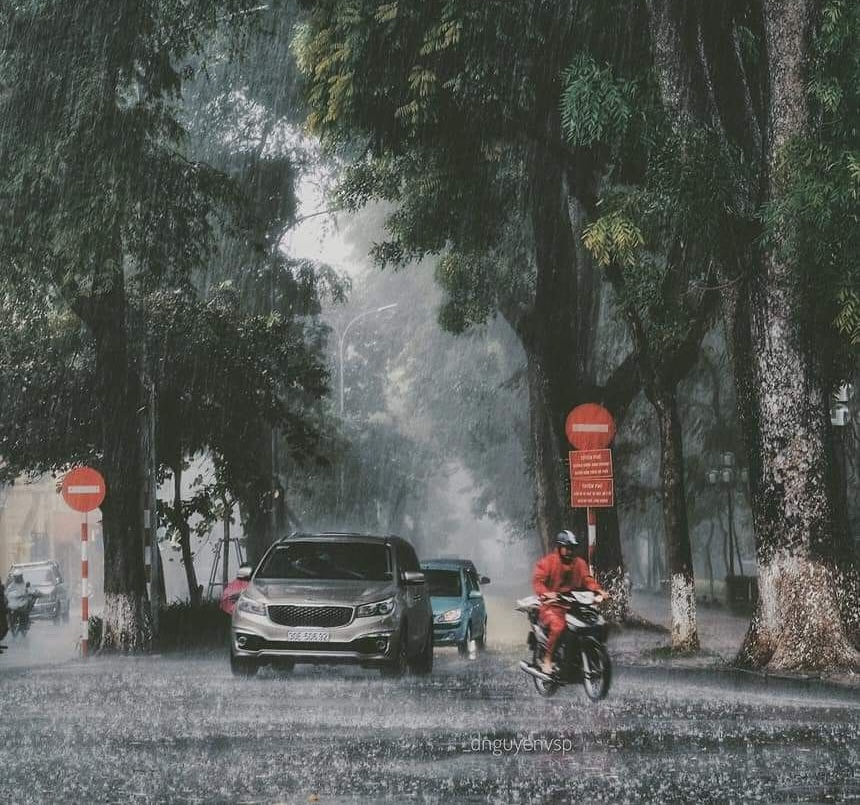
November, 2023.
In November 2023, when long spells of rain settled over Da Nang, I did not know that I was living through a noon that would stay with me for years. At the time, it was simply another rainy day: the steady tapping of droplets against the tin roof, the dim gray light filtering through the window, the cool dampness clinging to the tiled floor. I did not think about time, nor about how certain moments arrive quietly and leave without announcing that they will never return in the same way again. I only knew that I was waiting for lunchtime, waiting for my mother to cook lemongrass braised chicken, waiting for warmth to push back against the wet air of a November afternoon in central Vietnam.
The rain that day was not violent, only persistent. It fell in an even rhythm, as if it had nowhere else to be. The scent of wet earth drifted in through the cracks of the door, mixing with the faint smell of laundry that had not fully dried. Outside, the city continued to move, raincoats flashing through blurred streets, engines cutting through shallow floods, yet inside our small house, time seemed slower, contained. By eleven o’clock, my mother was home. She had not changed out of her office clothes, her hair still loose against her shoulders, before stepping directly into the kitchen. The sharp sound of the knife striking the cutting board rose above the rain. She seasoned the chicken with fish sauce, pepper, a little seasoning powder, a touch of oyster sauce. When the oil began to shimmer in the pan, she added the crushed lemongrass first. It hit the heat with a sudden hiss, releasing a fragrance that was sharp yet warm, cutting through the damp air. Only when the lemongrass edges turned lightly golden did she add the chicken. Steam rose, clouding the stove’s glass surface, and the pale pieces slowly deepened into a glossy brown as the sauce thickened and clung to each fold of meat.
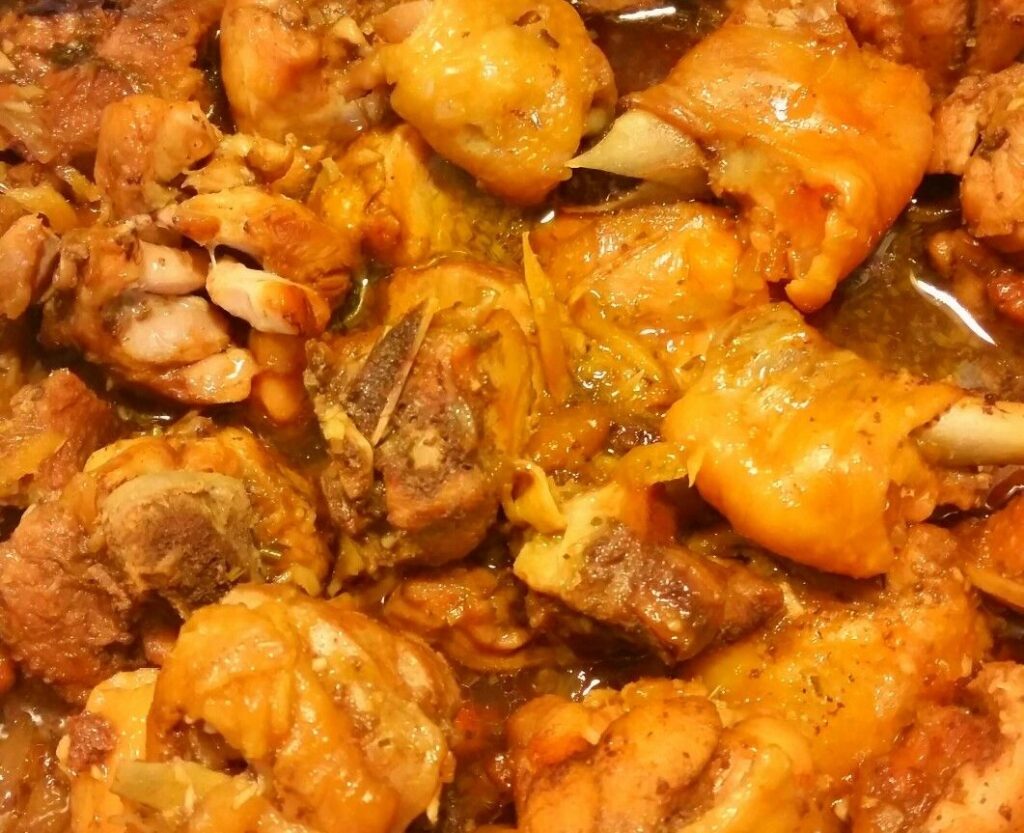
Lemongrass braised chicken is not the kind of dish people spend millions on to experience. On the contrary, it is a humble meal, the one that appears on ordinary days, in small kitchens, beneath low rooftops; so familiar that it almost becomes an unquestioned part of everyday life.
Perhaps that is why it settles so easily into memory. People do not remember it as something extraordinary, but as family meals filled with laughter under the harsh summer sun or on long, drizzling afternoons. Its flavor becomes part of childhood, of days when meals were still cooked by mom, when you was still scolded for eating too quickly, when you did not yet realize that such moments would eventually fade. Lemongrass, with its sharp and clean aroma, has long been a staple in Central Vietnamese cooking, not as a luxury, but as something that grows close to the earth, easy to find, woven into the rhythm of daily life.
Dishes like this are not passed down through written recipes, but through taste and intuition within each family. The proportions are never fixed. A little more fish sauce, a little less sugar, heat turned up or down; everything depends on the cook’s instinct. What is passed on is not precision measured in grams, but the familiar flavor of home, a shared understanding of when a dish feels “right.”
And perhaps that is where its meaning lies. Not in the ingredients, but in the way it teaches us to recognize “home” through taste. Over time, the dish is no longer just flavor, but becomes part of memory itself. All it takes is the scent of lemongrass rising from a pan, and something within settles; as if you has returned to a place they never truly left.
There is something about rain that makes the body crave salt. Perhaps it is the way humidity seeps into the skin, leaving a faint chill that calls for something stronger, something more defined. On rainy days, flavors seem to sharpen. The salt of fish sauce reaches deeper; the gentle heat of chili lingers longer; the fragrance of lemongrass feels almost protective. In contrast, bland food fades into the grayness of the afternoon. But braised chicken: rich, savory, steaming, stands its ground. When I sat down at the table and waited for my father to take the first bite, the piece I lifted was still too hot, and I had to blow on it before tasting. The taste of the fish sauce touched first, then the mild spice, then the lingering aroma of lemongrass that settled at the back of my throat. The meat was tender but not fragile, firm enough to slow the chewing. Yet I did not slow down. The wall clock was already approaching 12:15pm. I had school in the afternoon. My favorite pumpkin soup was still steaming beside me, but I set my chopsticks down reluctantly. Outside, the rain continued without mercy, and still I had to leave the table before the warmth had fully settled in me.
My father wore the kind of raincoat with extended flaps to shield me from the downpour. Raindrops struck against the plastic fabric in a steady percussion. From my seat behind him, I could see the back of his shirt gradually darkening with moisture. He did not worry about himself. He kept asking if I was wet, if my schoolbag was protected. But my thoughts remained at home, on the pot of braised chicken still warm on the stove. By the time we reached the school gate, water had risen halfway up the wheels. I was still deciding whether I should step into the flooded courtyard when a teacher walked out and announced that classes were canceled because of the heavy rain. I did not need to hear the entire sentence. The word “canceled” was enough. Something inside me lifted immediately. The frustration I had swallowed at lunch dissolved. My father and I turned back, laughing as rain soaked us both. The flooded road suddenly seemed gentle, almost kind. The world had returned something I thought I had lost, a little more time.
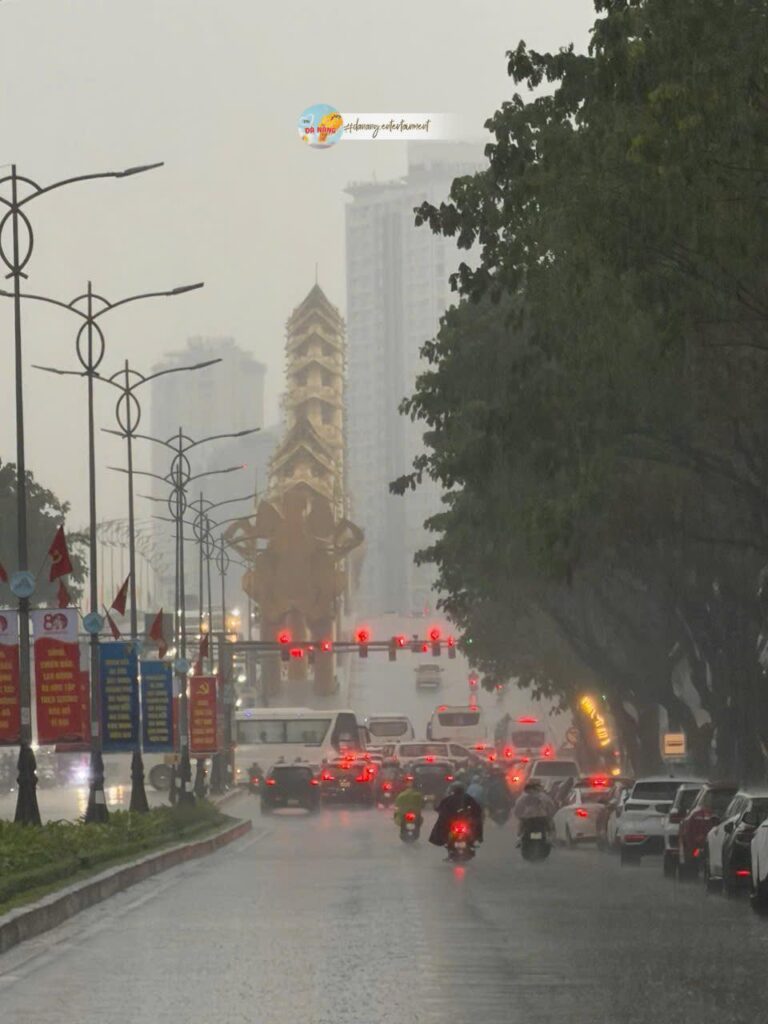
When we arrived home, I did not even change out of my damp clothes before walking straight to the kitchen. The meal was still there. The braised chicken was still warm, faint steam rising as if the interruption had never happened. This time, I did not have to glance at the clock. I did not have to rush. I took a large piece and chewed slowly. The savory tasted deeper, the lemongrass more vivid, the warmth spreading down my throat and into my chest, meeting the cool rain still clinging to my hair. The dish itself had not changed. The ingredients were the same. What had changed was the gift of time. What had been a hurried meal cut short by obligation became a noon restored, complete.
While living inside that afternoon, I saw nothing extraordinary: a rainy day, a simple dish, an unexpected school cancellation. It felt ordinary, almost trivial. But memory does not preserve what is grand; it preserves what is intimate. That braised chicken tasted better than it ever had, not because it was seasoned differently, but because I had been allowed to remain. Allowed to sit longer at the table. Allowed to believe, for a moment, that such afternoons would repeat endlessly. The longing that lingers now is not for the flavor itself, but for that illusion; the quiet certainty that there would always be another rainy November, another pot of lemongrass braised chicken, another chance to stay. Some noons pass without asking to be remembered, and only when we have traveled far from them do we realize that we will never quite return in the same way again…
-EL-
Where Love Is Served.
Proudly powered by WordPress
Leave a Reply